
Cornea Care & Surgery
Dr. Rabeea Khan is a board-certified cornea specialist providing comprehensive evaluation and treatment for a wide range of corneal conditions. She treats conditions that can affect the clarity, health, and function of the cornea, including corneal ulcers, infections, abrasions, injuries, and keratoconus.
Whenever appropriate, Dr. Khan prioritizes medical management and conservative treatment before considering surgery. Each patient receives an individualized treatment plan focused on achieving the best possible vision while protecting long-term eye health.
Conditions We Treat
Corneal ulcers and infections
Corneal abrasions and injuries
Keratoconus
Corneal inflammation and surface disorders
Other conditions affecting corneal health and clarity
Corneal Abrasions & Ulcers
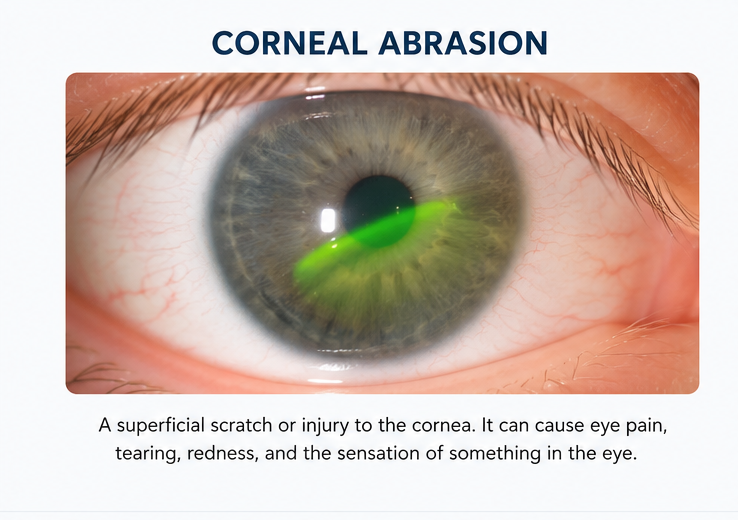
Corneal Abrasions
A corneal abrasion is a scratch or injury to the clear, protective surface of the eye (the cornea). It can occur from trauma, a foreign object entering the eye, contact lens-related irritation, or accidental scratching of the eye.
Symptoms include eye pain or discomfort, redness, excessive tearing, sensitivity to light, a gritty or foreign body sensation, blurred vision.
Most corneal abrasions heal with appropriate treatment and monitoring. Our physician will evaluate the injury and recommend treatment to promote healing and prevent complications.
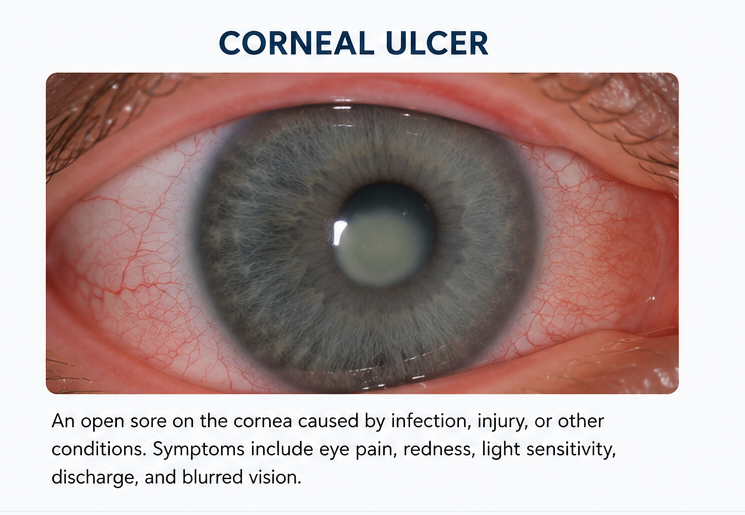
Corneal Ulcers
A corneal ulcer is an open sore or area of inflammation on the cornea, often caused by an infection. Corneal ulcers require prompt evaluation and treatment because they can progress and potentially affect vision if not managed appropriately.
Symptoms include increasing eye redness, moderate to severe eye pain, light sensitivity, decreased or blurred vision, eye discharge, a white spot on the cornea
If you experience symptoms concerning for a corneal ulcer, timely evaluation is important. Dr. Khan provides comprehensive assessment and treatment to protect the health of your cornea and preserve vision.
Keratoconus
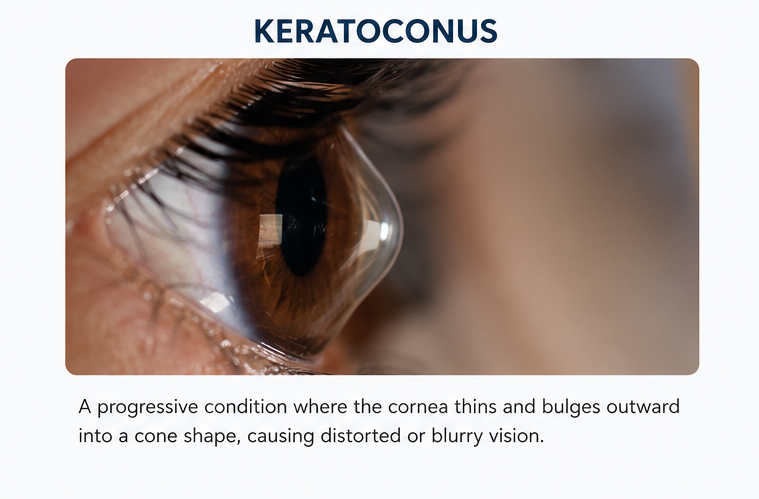
Keratoconus is a progressive condition in which the cornea, the clear front surface of the eye, becomes thinner and gradually changes shape. Instead of maintaining its normal round shape, the cornea develops a cone-like shape, causing light to focus improperly and resulting in blurred or distorted vision.
Keratoconus often begins during the teenage years or early adulthood and may progress over time. Early diagnosis and regular monitoring are important to help preserve vision and determine the most appropriate treatment plan.
Common symptoms of keratoconus may include:
Blurred or distorted vision
Increasing astigmatism
Difficulty seeing clearly at night
Glare or halos around lights
Eye strain or headaches
Difficulty achieving clear vision with glasses or standard contact lenses
Dr. Rabeea Khan provides comprehensive evaluation and treatment for patients with keratoconus. Using advanced corneal imaging and diagnostic testing, she monitors changes in the cornea and develops a personalized treatment plan based on each patient's condition and visual needs.
Treatment options depend on the severity and progression of keratoconus and may include specialty contact lenses, such as scleral lenses, and corneal cross-linking. Corneal cross-linking is a procedure designed to strengthen the cornea and help slow or halt the progression of keratoconus.
Dr. Khan performs corneal cross-linking to help preserve corneal strength and protect vision in appropriate patients. Her goal is to provide early intervention, personalized care, and the most effective treatment options to help patients maintain their best possible vision.